Description
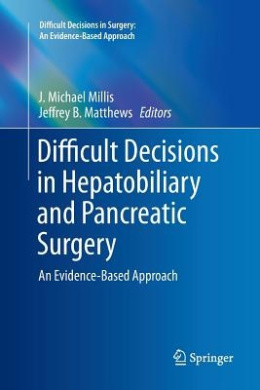
This book is part of a series covering surgical specialties. The volumes are multi-authored, containing brief chapters, each of which are devoted to one or two specific questions or decisions within that specialty that are difficult or controversial. The volumes are intended as a current and timely reference source for practicing surgeons, surgeons in training, and educators that describe the recommended ideal approach, rather than customary care, in selected clinical situations. Chapter 1: Finding and appraising the evidence: EBM and GRADE Chapter 2: Is Surgery Indicated for Asymptomatic Giant Hepatic Hemangioma? Chapter 3: What is the Best Surgical Method of Addressing Hepatic Hemangiomas? Chapter 4: Which Diagnostic Modality is Best to Assess Benign Hepatic Tumors? Chapter 5: Cystic Diseases of the Liver Chapter 6: When Should You Operate on Major Hepatic Trauma? Chapter 7: Surgical Treatment of Hepatocellular Carcinoma: Resection versus Transplantation Chapter 8: Hepatic Epithelioid Hemangioendothelioma Chapter 9: What is the Best Way to Screen Cirrhotic Patients for Hepatocellular Carcinoma in the United States? Chapter 10: When is Laparoscopic Liver Resection Preferred Over Open Resection? Chapter 11: Clinical Management of Pyogenic Liver Abscesses Chapter 12: Which is better local therapy for HCC, RFA or TACE? Chapter 13: When should patients with liver metastases from colorectal cancer receive chemotherapy? Chapter 14: What is the best way to assess hepatic reserve prior to liver resection in the cirrhotic patient? Chapter 15: Treatment Protocols for Small Hepatocellular Carcinoma (= 3cm): RFA or Resection? Chapter 16: Which is the Better Predictor of Hepatic Reserve Prior to Liver Resection: MELD or the Child-Pugh Score? Chapter 17: Early ( Chapter 18: Primary Closure or T-tube Drainage after Open or Laparoscopic Common Bile Duct Exploration? Chapter 19: Single-Incision or Multiport Laparoscopic Cholecystectomy Chapter 20: Management of Recurrent Cholangitis Chapter 21: Management of postoperative bile duct stricture Chapter 22: Immediate or Delayed Repair for Bile Duct Injury Recognized Postoperatively? Chapter 23: Management of Suspected Choledocholithiasis on Intraoperative Cholangiography Chapter 24: Management of Incidentally Discovered Gallbladder Cancer Chapter 25: Gallstone Ileus Chapter 26: Surgery or Endoscopy for Bile Duct Strictures secondary to Chronic Pancreatitis? Chapter 27: Routine or Selective Cholangiography for Elective Laparoscopic Cholecystectomy? Chapter 28: When is bile duct resection indicated for biliary strictures in primary sclerosing cholangitis? Chapter 29: Assessment of Bile Duct Tumors: Endoscopic vs Radiographic Chapter 30: Management of Significant Hemobilia: Hepatic Artery Embolization or Stenting? Chapter 31: The assessment of ductal margin in curative-intent surgery for perihilar Cholangiocarcinoma Chapter 32: Management of early post-transplant portal vein thrombosis: results of interventional techniques versus surgical Chapter 33: When should patients with bleeding esophageal varices undergo TIPS versus endoscopic therapy? Chapter 34: Management of symptomatic portal hypertension: TIPS vs. medical management Chapter 35: Should all hepatic arteriovenous fistulas be embolized? Chapter 36: Early or Delayed Cholecystectomy in Acute Gallstone Pancreatitis Chapter 37: Nutritional Support in Acute Necrotizing Pancreatitis Chapter 38: Management of Symptomatic Pancreatic Pseudocyst Chapter 39: Antibiotic Prophylaxis for Acute Necrotizing Pancreatitis Chapter 40: Endoscopic or Minimally Invasive Debridement of Walled-off Pancreatic Necrosis? Chapter 41: Surgical Debridement in Necrotizing Pancreatitis Chapter 42: Surgery or Endotherapy for Large Duct Chronic Pancreatitis Chapter 43: Pancreatic Head Resection for Painful Chronic Pancreatitis Chapter 44: Is total pancreatectomy with islet autotransplantation indicated in hereditary/genetic pancreatitis? Chapter 45: Management of Blunt Pancreatic Trauma in Children Chapter 46: Surgery or Surveillance for Asymptomatic Small Mucinous Pancreatic Head Cyst Chapter 47: Management of Asymptomatic IPMN in the Elderly Chapter 48: Minimally Invasive Surgery for Pancreatic Head Cancer Chapter 49: Advanced Pancreatic Cancer Discovered at Operation: The Role of Palliative Bypass Chapter 50: Neoadjuvant Therapy for Borderline Resectable Pancreatic Head Cancer Chapter 51: Neoadjuvant Therapy for Resectable Pancreatic Adenocarcinoma Chapter 52: Management of borderline resectable pancreatic cancer Chapter 53: Peritoneal Drain Placement at Pancreatoduodenectomy Chapter 54: Management of Villous Adenoma of the Ampulla of Vater Chapter 55: Splenic Preservation at Distal Pancreatectomy Chapter 56: Management of Small Nonfunctional Pancreatic Neuroendocrine Tumors Chapter 57: Management of Pancreatic Gastrinoma Chapter 58: Management of Pancreatic Cancer in the Elderly