Description
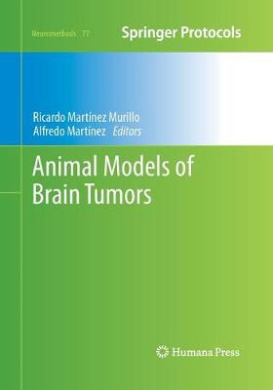
Although the available models, whether at the cellular, tissue, or animal level, do not exactly represent the biology of human brain tumors, animal models can offer significant insights into these tumors, providing a better understanding of biological mechanisms underlying tumor generation, growth, angiogenesis, invasion, and metastasis. Animal Models of Brain Tumors brings together developments and discoveries in “in vivo” experimental tumor research that have provided advances in our understanding of the cellular and molecular mechanisms involved in the generation, progression, and clinical outcome of brain neoplasms. Broken into convenient sections, this thorough volume includes topics such as animal model insights into human brain neoplasms, the cellular, molecular, and genetic basis of brain tumors, therapies in the treatment of malignant glioma, as well as imaging technologies in animal tumor models, i.e. measuring brain tumor growth and metabolism. Written for the popular Neuromethods series, chapters include the kind of detailed description and implementation advice that is essential for achieving successful results. Authoritative and cutting-edge, Animal Models of Brain Tumors provides the key methods needed to validate, compare, and contrast the animal model with its proposed human counterpart and further the understanding of our own serious ailments. Part I: Introduction Brain Tumor Models to Predict Clinical Outcome: Like the Phoenix? Lois A. Lampson Animal Models in Cancer Research: Assessment of Severity and the Application of Humane Endpoints Jos M. Orellana-Muriana Part II: Animal Models Offer Insights into Human Brain Neoplasms The VM Mouse Model of Glioblastoma Multiforme Thomas N. Seyfried, Laura M. Shelton, and Leanne C. Huysentruyt Oligodendroglioma Models Nanna Lindberg and Lene Uhrbom Medulloblastoma Model Jasmine Lau and William A. Weiss Learning about Retinoblastoma from Mouse Models that Missed David Cobrinik Ependymoma Models Jess Vaquero and Mercedes Zurita Meningioma Models Jessica Rainey and Randy L. Jensen Pituitary Models Walavan Sivakumar and William T. Couldwell Growth Regulation of Nervous System Tumors: Models for Assessment of Angiogenesis in Brain Tumors Kelly Burrell, Elena Bogdanovic, Shahrzad Jalali, Gelareh Zadeh, and Abhijit Guha Part III: Cellular, Molecular, and Genetic Basis of Brain Tumors: Data from Animal Models Using Genetically-Engineered Mouse Models to Understand Low-Grade Glioma Development and Growth in Children Aparna Kaul, Ibrahim Hussain, and David H. Gutmann EGFR and Tumor-Suppressor Function in Brain Cancer Development Julie Lessard and Al Charest Part IV: Therapies in the Treatment of Malignant Glioma: Data from Animal Models Rodent Glioma Models: Intracranial Stereotactic Allografts and Xenografts Hikmat Assi, Marianela Candolfi, Pedro R. Lowenstein, and Maria G. Castro Immunotherapy of High-Grade Gliomas: Preclinical In Vivo Experiments in Animal Models Kristen A. Batich, Bryan D. Choi, and Duane A. Mitchell Assessing Mechanisms of Glioblastoma Invasion Stephen M. Robbins and Donna L. Senger Part V: Imaging Technologies in Animal Tumor Models: Measuring Brain Tumor Growth and Metabolism Positron Emission Tomography (PET)-Based Molecular Imaging Yannic Waerzeggers, Thomas Viel, Sonja Schfers, Stefan Wagner, Andreas Faust, Burkhard Riemann, Klaus Kopka, Otmar Schober, Klaus Schfers, and Andreas H. Jacobs In Vivo Magnetic Resonance Spectroscopic Imaging (MRSI) and Ex Vivo Quantitative Neuropathology by High Resolution Magic Angle Spinning Proton Magnetic Resonance Spectroscopy (HRMAS) Rui V. Simes, Ana Paula Candiota, Margarida Juli-Sap, and Carles Ars Single Photon Emission Computed Tomography (SPECT) in Small Animal CNS Research Andr Constantinesco, Christian Goetz, and Philippe Choquet