Description
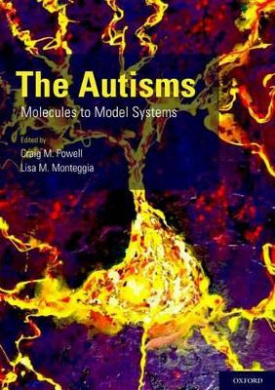
The Autisms: Molecules to Model Systems provides a roadmap to many of the genetic causes of autism and clarifies what is known at the molecular, cellular, and circuit levels. Focusing on tractable genetic findings in human autism and painstakingly dissecting the underlying neurobiology, the book explains, is the key to understanding the pathophysiology of autism and ultimately to identifying novel treatments. Craig M. Powell, M.D., Ph.D. is a Neurologist and Neuroscientist interested in the molecular, cellular, and circuit-level mechanisms underlying cognitive function and cognitive dysfunction in disorders such as autism and intellectual disability. Dr. Powell has been integrally involved in understanding brain abnormalities in genetic animal models of autism based on mutations in autism-associated genes such as SHANK3, neuroligins, neurexins, and PTEN. His work integrates multiple approaches to understanding how genetic mutations lead to altered neuronal function and altered circuit function to cause the behavioral symptoms of autism. His work has identified potential therapeutic targets for autism using such models. Lisa M. Monteggia, PhD is the Ginny and John Eulich Professor in Autism Spectrum Disorders, and Associate Professor of Psychiatry, at University of Texas Southwestern Medical Center in Dallas. Dr. Monteggia’s research interests focus on the molecular and cellular basis of neural plasticity as it pertains to psychiatric disorders. She utilizes molecular, cellular, behavioral, biochemical and electrophysiological approaches to elucidate how specific genes may contribute to psychiatric disorders in animal models, specifically focusing on better understanding Rett Syndrome/Autism and depression. Once these mechanisms are understood, treatments can be developed to target specific molecular pathways for therapeutic advances.