Description
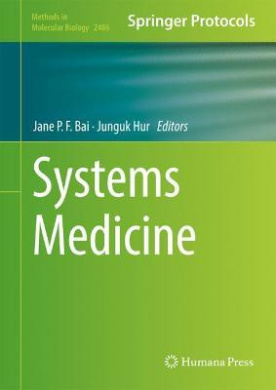
This volume explores the latest technological advances and covers all facets of systems medicine with respect to precision medicine. The chapters in this book are organized into four parts. Part One highlights the recent achievements in proteomics for biomarkers identification, integration of omics and phenotypic data for precision medicine, and medicine-guided treatment of drug-induced Stevens-Johnson syndrome. Part Two covers systems-based computational approaches for pharmaceutical research and drug development, the principle of optimizing systemic exposure of drugs, and Animal Rule for drug repurposing. Part Three looks at computational tools and methodologies of network biology, quantitative systems toxicology, and modeling and stimulating patient response variabilities. Part Four talks about how systems medicine can address unmet medical and health needs, and identify educational needs. Written in the highly successful Methods in Molecular Biology series format, chapters include introductions to their respective topics, lists of the necessary materials and reagents, step-by-step, readily reproducible laboratory protocols, and tips on troubleshooting and avoiding known pitfalls. Cutting-edge and thorough, Systems Medicine: Methods and Protocols is a valuable resource for the scientific community that will help researchers work together toward the further advancement of achieving the goal of promoting global health. Chapter 8 is available open access under a Creative Commons Attribution 4.0 International License via link.springer.com Acknowledgements… Preface… Table of Contents… Contributing Authors… Part I Scientific and Medical Advances 1. Mass Spectrometry-Based Proteomics for Biomarker Discovery Zhijun Cao and Li-Rong Yu 2. Integration of Omics and Phenotypic Data for Precision Medicine Juan Zhao, QiPing Feng, and Wei-Qi Wei 3. Stevens-Johnson Syndrome and Toxic Epidermal Necrolysis in the Era of Systems Medicine Chun-Bing Chen, Chuang-Wei Wang, and Wen-Hung Chung Part II Acceleration of Pharmaceutical Research and Development 4. Integration of Engineered Delivery with the Pharmacokinetics of Medical Candidates via Physiology-Based Pharmacokinetics Yuching Yang and Xinyuan Zhang 5. Applications of Quantitative System Pharmacology Modeling to Model Informed Drug Development Andy Z.X. Zhu and Mark Rogge 6. Combating Viral Diseases in the Era of Systems Medicine Jane P.F. Bai and Ellen Y. Guo 7. Toxicity Analysis of Pentachlorophenol Data with a Bioinformatics Tool Set Natalia Polouliakh, Takeshi Hase, Samik Ghosh, and Hiroaki Kitano Part III Tools and Methodologies 8. Virtual Populations for Quantitative Systems Pharmacology Models Yougan Cheng, Ronny Straube, Abed E. Alnaif, Lu Huang, Tarek A. Leil, and Brian J. Schmidt 9. Quantitative Systems Toxicology and Drug Development: The DILIsym Experience Paul B. Watkins 10. Introduction to Genomic Network Reconstruction for Cancer Research Guillermo de Anda Juregui, Hugo Tovar, Segio Alcal-Corona, Enrique Hernndez-Lemus 11. Learning in Medicine: The Importance of Statistical Thinking Massimiliano Russo and Bruno Scarpa 12. Development and Applications of Interoperable Biomedical Ontologies for Integrative Data and Knowledge Representation and Multiscale Modeling in Systems Medicine Yongqun He Part IV Systems Medicine to Address Unmet Medical Needs 13. Systems Biology to Address Unmet Medical Needs in Neurological Disorders Masha G. Savelieff, Mohamed H. Noureldein, and Eva L. Feldman 14. Informatics in Medical Product Regulation: The Right Drug at the Right Dose for the Right Patient Eileen Navarro Almario, Anna Kettermann, and Vaishali Popat 15. Personal Dense Dynamic Data Clouds Connect Systems Bio-Medicine to Scientific Wellness Gilbert S. Omenn, Andrew T. Magis, Nathan D. Price, and Leroy Hood 16. Educational Needs for Quantitative Systems Pharmacology Scientists James M. Gallo Subject Index List…