Description
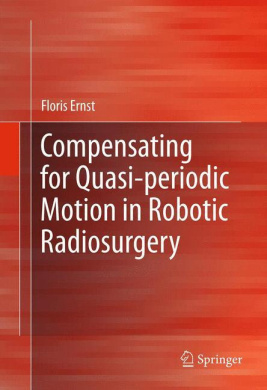
Compensating for Quasi-periodic Motion in Robotic Radiosurgery outlines the techniques needed to accurately track and compensate for respiratory and pulsatory motion during robotic radiosurgery. The algorithms presented within the book aid in the treatment of tumors that move during respiration. In Chapters 1 and 2, the book introduces the concept of stereotactic body radiation therapy, motion compensation strategies and the clinical state-of-the-art. In Chapters 3 through 5, the author describes and evaluates new methods for motion prediction, for correlating external motion to internal organ motion, and for the evaluation of these algorithms’ output based on an unprecedented amount of real clinical data. Finally, Chapter 6 provides a brief introduction into currently investigated, open questions and further fields of research. Compensating for Quasi-periodic Motion in Robotic Radiosurgery targets researchers working in the related fields of surgical oncology, artificial intelligence, robotics and more. Advanced-level students will also find this book valuable. Floris Ernst was born on August 6th, 1981, in Hinsdale, Illinois/USA. He studied Mathematics at Friedrich-Alexander-University (Erlangen, Germany) and at the University of Otago (Dunedin, New Zealand). He graduated from the University of Otago in 2004 with a Postgraduate Diploma in Sciences (Mathematics). In 2006, he graduated From Friedrich-Alexander-University with a Diploma in Mathematics, minoring in Computer Sciences. From 2006 on he held a position as a research associate at the University of Lbeck’s Institute for Robotics and Cognitive Systems, where he worked on motion compensation strategies in robotic radiosurgery. He graduated from this university with a Ph.D in 2011. Introduction.- Motion Compensation in Robotic Radiosurgery.- Signal Processing.- On the outside: prediction of human respiratory and pulsatory motion.- Going inside: correlation between external and internal respiratory motion.- Conclusion.- Appendix.