Description
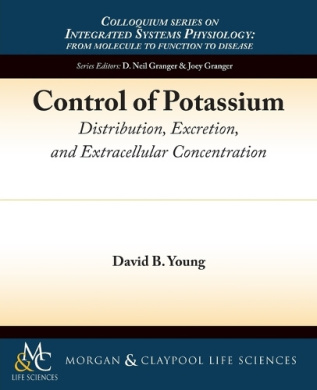
The ECF K concentration in man living in industrialized societies is normally 4.2 mM, while the intracellular concentration is approximately 140 mM. The ECF concentration is controlled carefully to maintain the value within approximately 15% of the normal level in order to maintain normal function of all cells of the body. This precise control is remarkable considering that the total massof K in the ECF is approximately 200 mM and during the course of each day K absorption from the gastrointestinal tract into the ECF may range from 10 to over 200 mM. Because dietary K intake is not regulated physiologically, the ECF concentration must be controlled by regulating renal excretion and movement of K between the extracellular and intracellular compartments. The control challenge is made more difficult by the impact of large variations in Na intake and renal Na excretion that affect renal K excretory function, and by the effects of a number of factors such as insulin and catecholamines that transiently alter the distribution of K between the intra- and extracellular compartments. Several physiologic mechanisms act to regulate renal K excretion and distribution across cell membranes throughout the body. Together they comprise an integrated control system that may be envisioned as being made up of several interacting negative feedback control mechanisms, all affecting removal of K from the ECF by renal excretion or transfer across cell membrane into the intracellular compartment. My intent in writing this book is to describe the aspects of regulation of ECF K, beginning in Chapter 1 with mechanisms that determine movement of K between the ECF and ICF. Chapter 2 focuses on renal tubular transport systems. I will devote greatest emphasis to describing the integrated functions of the components, in Chapter 3, as they operate together in a system to regulate extracellular K in response to commonly encountered challenges. In addition, interactions