Description
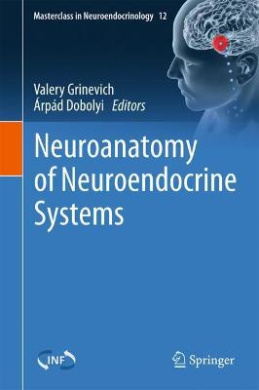
Valery Grinevich received his MD in 1992 (Kursk State Medical University, Russia) and PhD in 1996 (Russian Academy of Sciences, Saint-Petersburg). As a postdoctoral fellow, he worked with leading experts in neuroendocrinology, Georges Pelletier and Ferdinand Labrie (Quebec), and Greti Aguilera (NIH) focusing on neuroendocrine mechanisms of the stress response. In 2003, he joined the team of Peter H. Seeburg at the Max Planck Institute for Medical Research (MPIMF) Heidelberg. In 2008, he established his own group at the MPIMF and in 2012 – the Independent Schaller Group on Neuropeptides in Heidelberg. During the last decade, Grinevich’s team deciphered a novel mechanism of neuropeptide signalling in the brain: axonal oxytocin release modulating brain region specific behaviors. His work was supported by the Chica and Heinz Schaller Foundation, a number of German and European Agencies, and by the Human Frontier Science Program. In 2019 he has been promoted as Full University Professor and Chair of Department of Neuropeptide Research in Psychiatry at the Central Institute of Mental Health of the Heidelberg University as well as Affiliate Professor at the Georgia State University, Atlanta, USA. In 2021, Valery Grinevich received an award for his exceptional research contributions to the study of neuropeptides from the European College of Neuropsychopharmacology (ECNP). rpd Dobolyi received his PhD degree at Semmelweis Medical University (Budapest, Hungary) in 2000. It was followed by a postdoctoral period at NIMH in the laboratory of Ted Usdin in Bethesda, USA. Then, he received a Marie Curie Fellowship from the European Commission to work in the laboratory of Prof. Mikls Palkovits in Hungary. rpd Dobolyi founded his own research group in 2013 in the Department of Anatomy, Histology and Embryology at Semmelweis University, and focused on endocrine and behavioral changes in the maternal brain using biological systems approaches. Four years later, he was promoted to Full University Professor at Eotvos Lorand University, Budapest where he uses chemogenetic and RNA sequencing methods to understand subcortical mechanisms of social interactions in the Laboratory of Molecular and Systems Neurobiology also supported by the Hungarian Academy of Sciences. He is the Head of the Department of Physiology and Neurobiology at Eotvos Lorand University, Budapest since 2018. PART I – Structural Components of the Neuroendocrine Systems 1 Ontogenesis of hypothalamic neurons in mammals 2 Advances in MRI-based anatomy of the human hypothalamus and effects of the hypothalamic neuropeptide oxytocin on brain BOLD signals 3 Generation of hypothalamus and adenohypophysis from human pluripotent stem cells 4 The neurohypophysis and urophysis – ancient Piscine neurovascular interfaces 5 Cytoskeletal organization and plasticity in magnocellular neurons PART II – Neuroanatomy of Hypothalamo-hypophyseal Systems 6 Neuroanatomical and functional relationship between parvocellular and magnocellular oxytocin and vasopressin neurons 7 Fine chemo-anatomy of hypothalamic magnocellular vasopressinergic system with an emphasis on ascending connections for behavioural adaptation 8 Neuroanatomy of the GnRH/Kisspeptin System 9 Corticotropin-releasing hormone in the paraventricular nucleus of the hypothalamus- beyond hypothalamic-pituitary-adrenal axis control 10 Multifactorial regulation of the activity of hypophysiotropic thyrotropin-releasing hormone neurons PART III – Hypothalamic Control of Neuroendocrine Functions 11 Circadian control of neuroendocrine systems 12 The neuroanatomical organization of hypothalamic feeding circuits 13 Melanin-concentrating hormone, neuropeptide E-I, and MCH receptor 1 14 Neuroanatomy of tuberoinfundibular peptide 39 related to neuroendocrine and behavioral regulations 15 Functional chemoanatomy of PACAP in neuronal, neuroendocrine and neuronal circuits 16 Functional neuroanatomy of relaxin-3/RXFP3 systems in the brain: implications for integrated neuroendocrine and behavioral control