Description
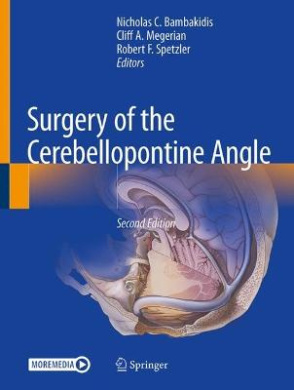
Part I. Foundations for Treatment.- Historical Perspectives.- Microsurgical Anatomy of the Cerebellopontine Angle and Its Suboccipital Retromastoid Approaches.- Radiology.- Neurology.- Part II. Surgical Approaches.- Approaches to the Cerebellopontine Angle.- Combined Surgical Approaches.- Functional Surgery of the Cerebellopontine Angle.- Endoscopy in the Cerebellopontine Angle.- Part III. Vestibular Schwannomas.- Biology and Genetics of Vestibular Schwannomas in Tumors of the Cerebellopontine Angle.- Treatment Options for Acoustic Neuroma, Including Stereotactic Radiosurgery.- Translabyrinthine Approach.- Hearing Rehabilitation Following Acoustic Neuroma Surgery.- Acoustic Neuroma Surgery: Retrosigmoid Techniques.- Acoustic Neuroma Surgery: The Middle Fossa Approach.- Complications and Cranial Nerve Rehabilitation.- Facial Reanimation.- Hearing and Surgical Considerations in Neurofibromatosis Type 2.- Prevention and Management of Postoperative Cerebrospinal Fluid Leakage.- Part IV. Nonschwannomatous Lesions of the CPA.- Temporal Bone Neoplasms.- Congenital Rest Lesions and Rare Tumors.- Vascular Lesions of the Cerebellopontine Angle.- Part V. Cases and Approaches (animations and videos).- Case 1: Retrosigmoid Approach for Vestibular Schwannoma.- Case 2: Combined Transpetrosal Approach with Hearing Preservations for Resection of a Meningioma.- Case 3: Far-Lateral Approach for a Foramen Magnum Meningioma.- Case 4: Resection of an Acoustic Schwannoma Complicated by Tumor Encasement of the Anterior Inferior Cerebellar Artery Using a Translabyrinthine Approach.- Case 5: Transcondylar Approach for Giant Aneurysm with Posterior Inferior Cerebellar Artery Bypass.- Case 6: Far-Lateral Approach for a Posterior Inferior Cerebellar Artery Aneurysm Clipping.- Case 7: Right Retrosigmoid Craniotomy for Microvascular Decompression for Trigeminal Neuralgia (Endoscope-Assisted).- Case 8: Right Retrosigmoid Craniotomy for Microvascular Decompression of Hemifacial Spasm.- Case 9: Left Retrosigmoid Craniotomy for Microvascular Decompression of Glossopharyngeal Neuralgia.- Case 10: Anterior Transpetrosal Approach for Resection of Petroclival Meningioma.- Case 11: Vestibular Schwannoma Resection with Facial Nerve Displaced Dorsally.- Case 12: Right Retrosigmoid Craniotomy for Pontine Cavernous Malformation.- Case 13: Lateral Transcondylar Craniotomy for PICA Aneurysm.- Case 14: Left Retrosigmoid Approach in Large Vestibular Schwannoma in Patient with NF2.- Case 15: Retrosigmoid Approach for a Left-sided Trigeminal Schwannoma.- Case 16: Retrosigmoid Approach to Right-sided Epidermoid Cyst.- Case 17: Translabrynthine Transtemporal Approach for Left Vestibular Schwannoma.- Case 18: Middle Cranial Fossa Craniotomy for a Left Petrous Apex Lesion.- Case 19: Extended Translabyrinthine Approach for Left-sided Vestibular Schwannoma.- Case 20: Right-sided Retrosigmoid Approach to Small Vestibular Schwannoma.- Case 21: Transotic Approach to Left-sided Jugular Paraganglioma/Glomus Tumor for Partial Debulking.- Appendix: Anatomic Dissection.