Description
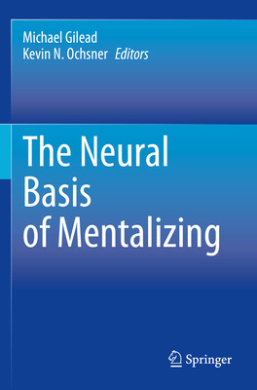
Humans have a unique ability to understand the beliefs, emotions, and intentions of othersa capacity often referred to as mentalizing. Much research in psychology and neuroscience has focused on delineating the mechanisms of mentalizing, and examining the role of mentalizing processes in other domains of cognitive and affective functioning. The purpose of the book is to provide a comprehensive overview of the current research on the mechanisms of mentalizing at the neural, algorithmic, and computational levels of analysis. The book includes contributions from prominent researchers in the field of social-cognitive and affective neuroscience, as well as from related disciplines (e.g., cognitive, social, developmental and clinical psychology, psychiatry, philosophy, primatology). The contributors review their latest research in order to compile an authoritative source of knowledge on the psychological and brain bases of the unique human capacity to think about the mental states of others. The intended audience is researchers and students in the fields of social-cognitive and affective neuroscience and related disciplines such as neuroeconomics, cognitive neuroscience, developmental neuroscience, social cognition, social psychology, developmental psychology, cognitive psychology, and affective science. Secondary audiences include researchers in decision science (economics, judgment and decision-making), philosophy of mind, and psychiatry. 1. A Guide to The Neural Bases of Mentalizing 2. Mapping mentalising in the brain 3. Early Theory of Mind development – Are infants inherently altercentric? 4. Towards the Integration of Social Cognition and Social Motivation in Autism Spectrum Disorder 5. Self-Other Distinction 6. The evolution of mentalizing in humans and other primates 7. Mentalizing in Non-Human Primates 8. Empathic accuracy: Empirical overview and clinical applications 9. Empathic accuracy: Lessons from the perception of contextualized real-life emotional expressions 10. Flexible social cognition: A context-dependent failure to mentalize 11. Linking models of theory of mind and measures of human brain activity 12. Simulation, Predictive Coding, and the Shared World 13. Mental Files and Teleology 14. The organization of social knowledge is tuned for prediction 15. Computational models of mentalizing 16. From Neurons to Knowing: Implications of Theoretical Approaches for Conceptualizing and Studying the Neural Bases of Social Understanding 17. The Tree of Social Cognition: Hierarchically Organized Capacities of Mentalizing 18. The cognitive basis of mindreading 19. The Neural Basis and Representation of Social Attributions 20. The Conceptual Content of Mental Activity 21. The role(s) of language in Theory of Mind 22. Constructive Episodic Simulation: Cognitive and Neural Processes 23. Proactive by Default 24. Computational approaches to mentalizing during observational learning and strategic social interactions 25. Mentalizing in value-based social decision-making: shaping expectations and social norms 26. Mentalizing in Value Based Vicarious Learning 27. An examination of accurate versus “biased” mentalizing in moral and economic decision-making 28. The role of morality in social cognition 29. An interbrain approach for understanding empathy: the contribution of empathy to interpersonal emotion regulation 30. The Role of Mentalizing in Communication Behaviors 31. Tangled Representations of Self and Others in the Medial Prefrontal Cortex 32. Why Don’t You Like Me? The Role of the Mentalizing Network in Social Rejection 33. Putting the “me” in “mentalizing”: Multiple constructs describing self versus other during mentalizing and implications for social anxiety disorder 34. The self-other distinction in psychopathology: Recent developments from a mentalizing perspective