Description
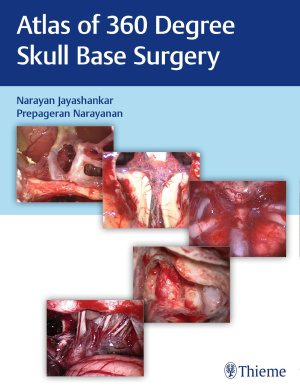
Skull base surgery has evolved over the last decade into a symbiotic combination of cutting-edge technology and surgical skills. From the ORL perspective, skull base is usually performed by three separate teams, namely, rhinologist who performs the endoscopic transnasal skull base surgery, neurotologist who performs posterolateral skull base, and head and neck surgeon who performs the open skull base approaches. These traditional division, although still very much applicable in most countries, is now being challenged by some group of surgeons who perform the entire skull base surgery. The editors of this surgical atlas belong to this group who performs the entire range of skull base as the surgical skills and instruments are interchangeable. Current fellowship includes exposure to the entire range of skull base, thus pioneering a younger generation of skull base surgeons who inherit the same versatility and technical capability of performing the entire range of skull base surgery. Many colleagues around the globe practice a single corridor of approaches. However, we believe in practicing 360-degree skull base, thus the need for this unique atlas that encompasses the entire skull base. Key Features: Step-by-step description of procedures with detailed photographsMore than 2,000 high-definition photographs to enhance the understanding of the textDetailed description of tips, tricks, and pitfalls to be avoided is covered in the atlas.Complications and their management, reconstruction of skull base defects, and rehabilitation chaptersComprehensive overview of pituitary tumors, craniopharyngioma, meningioma, craniovertebral junction pathologies, and chordoma Section I. Pituitary Gland Tumors 1 Pathologies of the Sellar Region 2 Endoscopic Transnasal Approach for Pituitary Tumors 3 Endoscopic Endonasal Surgeries for Pituitary Macroadenoma 4 Endoscopic Endonasal Revision Surgery for Pituitary Adenoma 5 Endoscopic Endonasal Surgery for Functioning Pituitary Adenoma 6 Endoscopic Endonasal Surgery for Cystic Lesions of the Sella Section II. Supra-sellar Region 7 Craniopharyngioma 8 Endoscopic Endonasal Transspheniodal Transplanum Transtuberculum Approach 9 Endoscopic Endonasal Surgeries for Craniopharyngioma 10 Microsurgical Approach for Suprasellar Lesions 11 Sellar, Parasellar, and Suprasellar Meningioma 12 Tailored Endonasal Endoscopic Approaches for Meningioma Involving the Planum Spheniodale and Tuberculum Sellae 13 Pterional Craniotomy and Resection of Tuberculum Sellae Meningioma Section III. Transcribriform Approach 14 Endoscopic Resection of Sinonasal Tumors with Endonasal Craniectomy Section IV. Clival Region 15 Skull Base Chordoma 16 Transclival Approach to the Skull Base and Posterior Fossa 17 Endoscopic Endonasal Surgeries for Clival Chordomas Section V. Craniocervical Junction 18 Pathologies of the Craniocervical Junction 19 Endonasal Endoscopic Surgeries of the Craniocervical Junction Section VI. Orbital Region 20 Approach to Orbital Lesions: Intraconal and Extraconal 21 Endonasal Endoscopic Surgeries of the Orbit Section VII. Orbital Apex and Optic Nerve 22 Pathologies of the Orbital Apex and Optic Nerve 23 Endonasal Endoscopic Surgeries of the Orbit Apex and Optic Nerve Section VIII. Infratemporal Fossa and Parapharyngeal Space 24 Endoscopic Transpterygoid Approaches to the Coronal Plane 25 Endonasal Endoscopic Surgeries of Lesions Occupying the Infratemporal Fossa and the Parapharyngeal Space 26 Management of Juvenile Nasopharyngeal Angiofibroma Section IX. Petrous Region 27 Pathologies of the Petrous Apex 28 Endonasal Endoscopic Surgeries for Petrous Apex Lesions 29 Endoscopic Petroclival Approach Section X. Meckel’s Cave 30 Meckel’s Cave Lesions 31 Endonasal Endoscopic Surgeries at Meckel’s Cave 32 Trigeminal Schwannomas Section XI. Cerebrospinal Fluid Rhinorrhea 33 Endoscopic Management of Cerebrospinal Fluid Rhinorrhea 34 Endonasal Endoscopic Surgeries for Cerebrospinal Fluid Leakage 35 Open Surgical Management of Encephaloceles Section XII. Reconstruction in Endoscopic Skull Base 36 Principles and Techniques of Reconstruction in Skull Base Defects Section XIII. Cavernous Sinus 37 Transcavernous and Anterior Transpetrous Approaches 38 Cavernous Sinus Surgery Section XIV. Sinonasal Tumors 39 Sinonasal Tumors 40 Endonasal Endoscopic Management of Sinonasal Tumors Section XV. Skullbase Fibro-osseous Pathologies 41 Skull Base Fibro-osseous Pathologies 42 Endoscopic Management of Skull Base Fibro-osseous Pathologies 43 Combined Open and Endonasal Endoscopic Management of Skullbase Fibro-osseous Pathologies Section XVI. Complications 44 Complications in Endoscopic Skull Base Surgery Section XVII. Basics in Otology 45 Cortical Mastoidectomy 46 Posterior Tympanotomy and Extended Posterior Tympanotomy 47 Facial Nerve Anatomy and Relationships Section XVIII. Trnaslabyrinthine Approach 48 The Enlarged Translabyrinthine Approach 49 Translabyrinthine Approach for the Resection of a Large Vestibular Schwannoma Section XIX. Approaches Through the Otic Capsule 50 Modified Transcochlear Approach Type A 51 Transotic Approach 52 Modified Transcochlear Approach Type B 53 Modified Transcochlear Approach Type C Section XX. Retrolabyrinthine Approach 54 Petrous Apex Cholesterol Granuloma Excision-Transmastoid Retrolabyrinthine Approach Section XXI. Presigmoid Approach 55 Presigmoid Retrolabyrinthine Approach Section XXII. Management of Glomus Tumors/Approaches to Jugular Foramen 56 Glomus Tympanicum Tumors 57 Management of Class B1 and B2 Temporal Bone Paragangliomas (Glomus Tumors) 58 Management of Class B3 Temporal Bone Paragangliomas (Glomus Tumors) 59 Management of Type C Glomus Tumors: Infratemporal Fossa Type A Approach for Glomus Jugulare Tumors 60 Petro-Occipital Transsigmoid Approach Section XXIII. Approach to Foramen Magnum Tumors 61 Far and Extreme Lateral Transcondylar Approach to the Foramen Magnum Section XXIV. Surgeries for Vertigo 62 Endolymphatic Sac Decompression 63 Transmastoid Labyrinthectomy 64 Vestibular Neurotomy by Retrosigmoid Approach Section XXV. Microvascular Decompression 65 Endoscope-Assisted Retrosigmoid Approach in Neurovascular Decompression Section XXVI. Retrosigmoid Approach 66 Retrosigmoid Approach 67 Retrosigmoid Craniotomy with Stereotactic Supratentorial Cerebrospinal Fluid Diversion Section XXVII. Middle Cranial Fossa 68 Middle Cranial Fossa Approach 69 Extended Middle Cranial Fossa Approach Section XXVIII. Otogenic Infections and Tumors 70 Single-Stage Transmastoid Drainage of Otogenic Intracranial Abscess 71 Subtotal Petrosectomy for Cochlear Implantation 72 Lateral Temporal Bone Resection 73 Facial Neuroma Section XXIX. Rehabilitative Surgery 74 Hearing Restoration in Skull Base Surgery 75 Reanimation of the Paralyzed Face 76 Rehabilitation of Lower Cranial Palsies after Skull Base Surgeries