Description
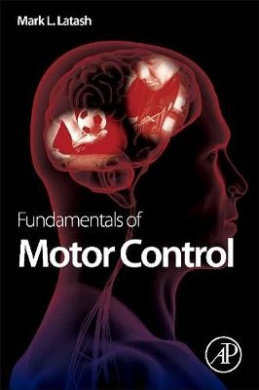
Motor control explores how the nervous system interacts with the body and environment to produce purposeful, coordinated movements. Books with “motor control” in the title typically express a particular perspective about motor control, but are rarely comprehensive. While the emphasis of this book is on physics and neurophysiology of motor control, there are sections explicitly dedicated to control theory, dynamical systems, biomechanics, motor learning, and even pathology. The book begins with an introduction to the field and review of the history of movement studies, followed by information about movement production. The book then goes into different theoretical approaches to motor control and coordination. The chapters following move away from theory into practicalities, discussing the spinal cord and brain structures associated with movement, including the motor cortex, the cerebellum, and the basal ganglia. There is a brief chapter on major motor pathologies associated with injuries to or dysfunction of neural structures. The book then applies the information from earlier chapters to daily behaviors such as standing, walking, reaching, and grasping, as well as motor learning and adaptation. The final chapter describes methods used in motor control studies, from biomechanics to electrophysiological methods and brain imaging techniques. This book will be of use to researchers looking for a general overview of the field, and for instructors of university courses in this area. Mark Latash is a Distinguished Professor of Kinesiology and Director of the Motor Control Laboratory at the Pennsylvania State University. He received equivalents of B.S. in Physics and M.S. in Physics of Living Systems from the Moscow Institute of Physics and Technology, and a Ph.D. in Physiology from Rush University in Chicago. His research interests are focused on the control and coordination of human voluntary movements, movement disorders in neurological disorders, and effects of rehabilitation. He is the author of “Control of Human Movement (1993) “The Neurophysiological Basis of Movement (1998, 2008), “Synergy (2008), and “Fundamentals of Motor Control (2012). In addition, he edited eight books and published about 350 papers in refereed journals. Mark Latash served as the Founding Editor of the journal “Motor Control (1996-2007) and as President of the International Society of Motor Control (2001-2005). He has served as Director of the annual Motor Control Summer School series since 2004. He is a recipient of the Bernstein Prize in motor control. Preface 1. A Philosophical Introduction 2. Elements of History 3. Features of the System for Movement Production 4. Instructive Examples 5. Control with Forces and Torques 6. Control with Muscle Activations 7. Control Theory Approaches 8. Physical Approaches 9. Coordination 10. Neurophysiological Structures 11. Exemplary Behaviors 12. Effects of Practice and Adaptation 13. Methods in Motor Control Studies Glossary Index